
How to Analyze a Rental Property Like a Pro
Real Estate, Passive Income, Wealth Building
How to Analyze a Rental Property Like a Pro
Thinking about buying your first rental and feeling a little overwhelmed by the numbers? You’re not alone. The good news: you don’t need to be a Wall Street analyst to run the math. With a few simple steps, you can size up a rental property and see if it actually helps you build passive income and long‑term wealth.

Step 1: Start With the Big Picture
Before you even touch a calculator, get clear on why you’re investing in real estate. Is your main goal steady passive income every month, long‑term wealth building through appreciation, or a mix of both? Your answer changes what a “good deal” looks like. For example, a cash‑flow heavy property might be in a cheaper area with higher rents relative to price, while a long‑term appreciation play might be in a stronger, more expensive neighborhood with slower but steadier growth.
Also think about how hands‑on you want to be. If you hate fixing leaky faucets, you’ll either budget for a property manager or focus on lower‑ maintenance properties. Clarity here keeps you from chasing every “deal” and helps you stay aligned with your bigger wealth building plan.
Step 2: Estimate Realistic Rental Income
Next up: what can the place actually rent for? Don’t just trust the seller’s flyer or a random online estimate. Look at:
- Comparable rentals (same beds, baths, and condition) in the same neighborhood
- Current listings (what landlords are asking now, not last year)
- Vacancy rates in the area (how long rentals sit empty)
Be conservative. If similar units rent for $1,600–$1,800, you might plug in $1,600–$1,700 as your estimate. Overestimating rent is one of the quickest ways to turn a “great” deal into a money drain.
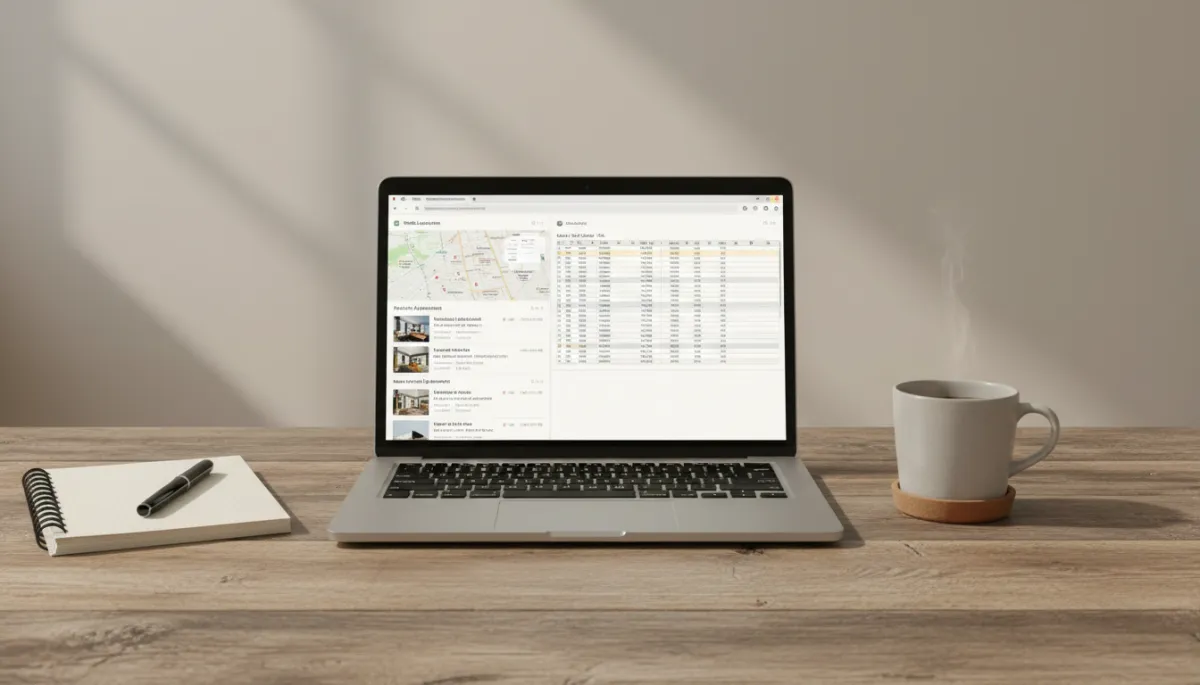
Ground your rent estimate in real comps, not wishful thinking or sales hype.
Step 3: List Every Expense (Yes, All of Them)
Now the unsexy part that separates pros from amateurs: expenses. New investors often just subtract the mortgage from the rent and call it a day. That’s how “cash‑flowing” properties surprise you with negative numbers. Make a simple list and include:
- Mortgage payment (principal + interest)
- Property taxes and insurance
- Utilities you’ll cover (if any)
- Property management (often 8–10% of rent)
- Maintenance and repairs (a common rule of thumb is 8–10% of rent)
- Capital expenses (roof, HVAC, major systems; maybe another 5–10%)
- Vacancy (budget a few weeks of lost rent per year)
Step 4: Calculate Cash Flow and Cash‑on‑Cash Return
Here’s where it gets fun. Take your monthly rent, subtract all monthly expenses, and what’s left is your cash flow. That’s the money hitting your pocket each month—your true passive income from this property. Even a few hundred dollars per month, multiplied over several properties, can become a serious wealth building engine over time.
To compare different deals, look at cash‑on‑cash return. That’s your annual cash flow divided by the cash you put in (down payment, closing costs, initial repairs). If you invest $40,000 and the property throws off $4,000 in cash flow in a year, that’s a 10% cash‑on‑cash return. There’s no magic “right” number, but you want a return that beats what you’d get leaving that money sitting in a savings account or low‑yield investment.

Simple cash flow math reveals whether a rental truly supports your goals.
Step 5: Don’t Forget Long‑Term Wealth Building
Monthly cash flow is great, but real estate also shines over the long run. While your tenants are paying rent, they’re also slowly paying down your mortgage. That means your equity in the property grows, even if prices stay flat for a while. On top of that, you may see appreciation as the neighborhood improves or demand increases.
When you analyze a deal, zoom out and ask: “If I hold this for 10–20 years, what could this do for my net worth?” A property that modestly cash flows today but sits in a solid, growing area can quietly become a big chunk of your wealth building strategy later on. That’s the power of combining passive income with long‑term equity growth.
Step 6: Stress‑Test Your Numbers
Finally, run a quick “what if” test. What if rent drops by $100? What if your expenses are 10% higher than expected? What if you have two months of vacancy? A solid deal should still survive a few bumps without turning into a financial nightmare. If a tiny change in assumptions wipes out your cash flow, keep looking or negotiate a better price.
Bringing It All Together
Analyzing a rental property like a pro isn’t about fancy spreadsheets or complicated formulas. It’s about being honest with the numbers and clear about your goals. Understand why you’re investing, estimate rent based on real data, count all the expenses, check your cash flow and returns, and remember the long‑term wealth building power of real estate.
Do this consistently, and you’ll stop guessing and start making confident, data‑driven decisions. That’s how first‑time investors turn their very first rental into the foundation of real passive income and a serious long‑term wealth building plan—one solid property at a time.